A geography scavenger hunt can be more than a race to copy isolated facts. With the right structure, it becomes a compact inquiry lesson in which students locate evidence, compare sources, read maps, and build a picture of a region.
The difference is in the questions. “Find the tallest mountain” produces one fact. “How might mountain ranges affect settlement, climate, or travel?” asks students to use the fact.
Give the hunt a geographic purpose
Choose a clear focus for each activity. A continent hunt might emphasize:
- Physical geography and landforms
- Human geography and population
- Cultural diversity and language
- Economic connections and resources
- Landmarks and historical geography
- Environmental challenges
Students can still encounter a variety of clues, but the focus helps the final answers connect.
For short browser-based practice, Postcard Pinpoint uses openly reusable landmark photographs to connect memorable places with continental regions, countries, and map location. Each landmark is treated as one geographic clue rather than a stand-in for an entire country or culture.
Build clues in layers
A strong sequence moves from locating to interpreting.
Layer 1: Find
Students locate a country, city, river, mountain range, desert, or landmark.
Layer 2: Describe
They record a useful characteristic, such as location, size, climate, language, or regional importance.
Layer 3: Connect
They explain a relationship: how a river supports settlement, how elevation affects climate, or how a trade route links regions.
Layer 4: Question
They identify something the clue does not explain and propose a follow-up question.
This keeps the hunt from becoming a page of disconnected answers.
Require map use, not only web search
Provide a political map, physical map, and one thematic map when possible. Ask students to identify which map helped with each clue.
For example:
- A political map helps locate national borders and capitals.
- A physical map helps identify mountains, rivers, and deserts.
- A climate or population map helps compare regional patterns.
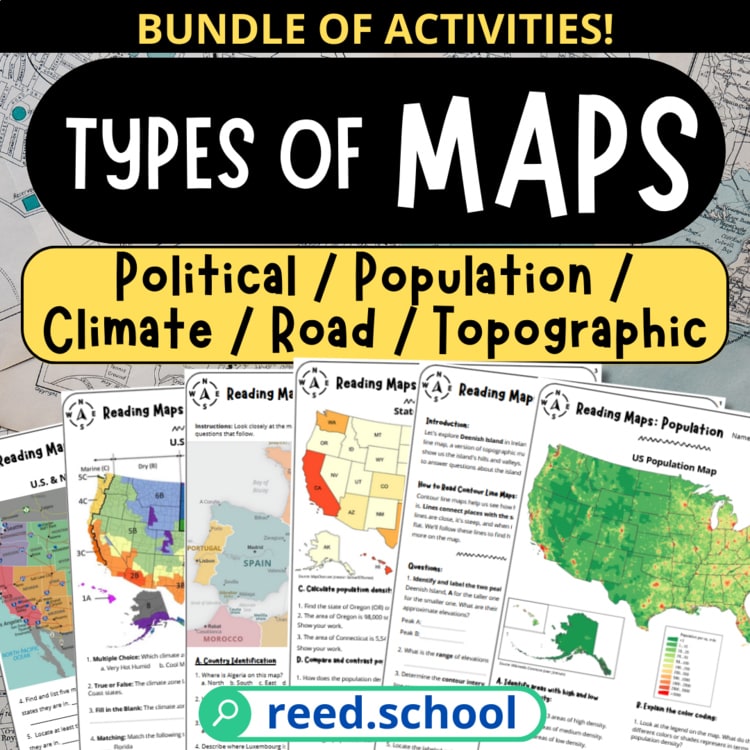
The Types of Maps guide can provide a useful review even for older students who need to reconnect map type with purpose.
Teach a simple source-check routine
Students do not need a graduate seminar in source evaluation, but they should not copy the first search snippet they see. Use a short checklist:
- Who created the information?
- Is the page designed to inform, sell, entertain, or persuade?
- Does the information include a date?
- Can a second reliable source confirm the fact?
- Is the answer specific enough to match the question?
For changing information such as population, officeholders, or travel rules, require a recent source and the year of the data.
Reduce the temptation to copy
Design response spaces that require processing:
- Write the answer in ten words or fewer.
- Explain why the fact matters.
- Sketch and label the feature.
- Compare it with another region.
- Write one similarity and one difference.
- State the map or source used.
A student can copy a sentence without understanding it. A concise explanation or comparison is harder to fake and easier to assess.
Use roles for collaborative hunts
Groups work better when every student has a defined contribution. Possible roles include:
- Navigator: uses maps to locate features
- Researcher: finds supporting information
- Recorder: writes concise answers
- Skeptic: checks sources and asks for evidence
- Connector: identifies patterns across clues
Rotate roles during a multi-day unit so students practice more than one skill.
Add a synthesis product
The hunt should end with something that brings the clues together. Keep it short enough that the research remains the main event.
Options include:
- A one-page regional profile
- A labeled map with five annotated features
- A “most surprising pattern” paragraph
- A travel route justified by geography
- A comparison between two continents
- A three-slide briefing for a classmate
Ask students to cite or list the sources used, even if the format is informal.
Avoid flattening a continent into one culture
Continents contain many countries, languages, histories, religions, ecosystems, and communities. A hunt should not present one landmark, food, or tradition as representative of everyone.
Use plural language and contrasts:
- “One tradition practiced in…” rather than “The tradition of…”
- “Some regions experience…” rather than “The continent is…”
- “Compare two countries” rather than asking for one cultural fact to stand for an entire continent
Invite students to notice internal diversity as part of the geography.
Build accessibility into the hunt
Provide a curated source list for students who may struggle with open web research. Offer audio or text-to-speech options where available. Break long hunts into visible checkpoints.
Students can also choose how to demonstrate some answers: a sentence, labeled sketch, comparison table, or short oral explanation.
For multilingual learners, allow key terms to be researched in more than one language while requiring the final explanation in the language of instruction.
Assess the thinking, not the speed
A useful rubric can emphasize:
- Accurate location and map use
- Relevant evidence
- Clear explanation
- Source quality
- Connections across clues
- Complete but concise communication
Do not reward the first group finished if the answers are shallow or unsupported. The goal is careful inquiry, not frantic searching.
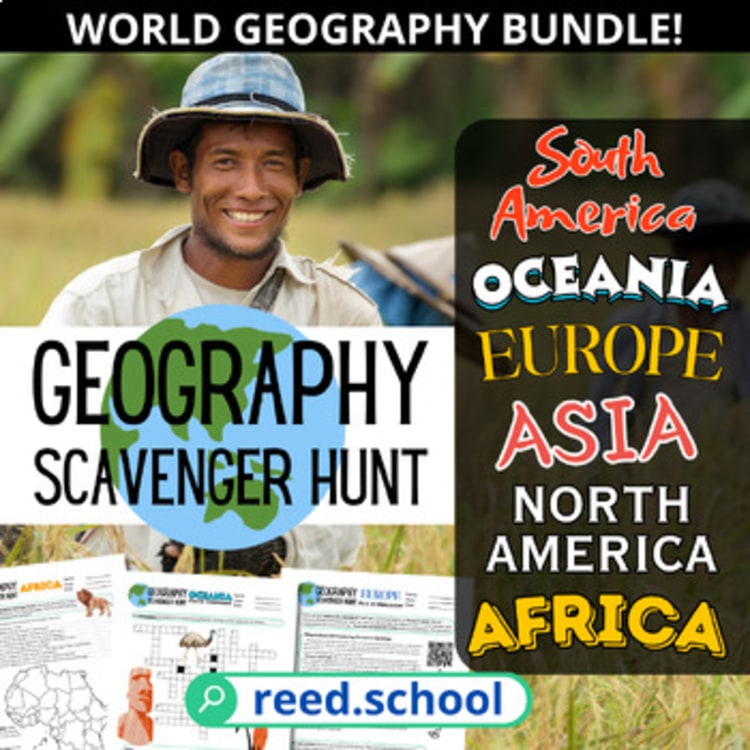
The World Geography & Culture Scavenger Hunts provide six continent-based investigations with landmarks, drawing, and critical-thinking prompts. They can serve as a unit spine, a research rotation, or a set of independent enrichment lessons.