Seasonal lessons can bring energy to a classroom, but the theme should support the academic goal rather than replace it. A Halloween map challenge, winter travel problem, or spring migration lesson becomes worthwhile when students practice a skill they can use again in a nonseasonal context.
The simplest test is this: Could you name the learning target without mentioning the holiday? If the answer is yes, the theme is probably doing useful work.
Begin with the skill
Write the academic target first:
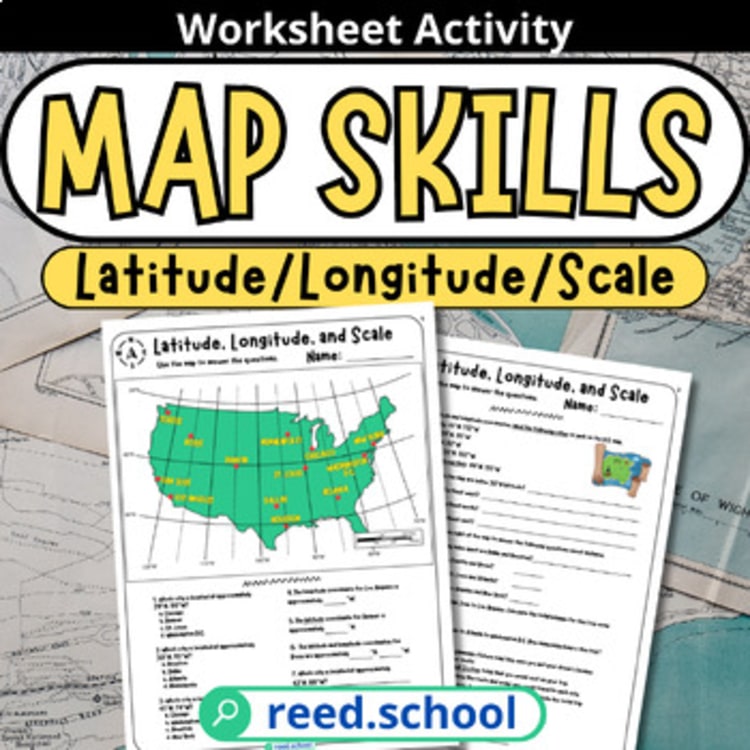
- Plot latitude and longitude accurately.
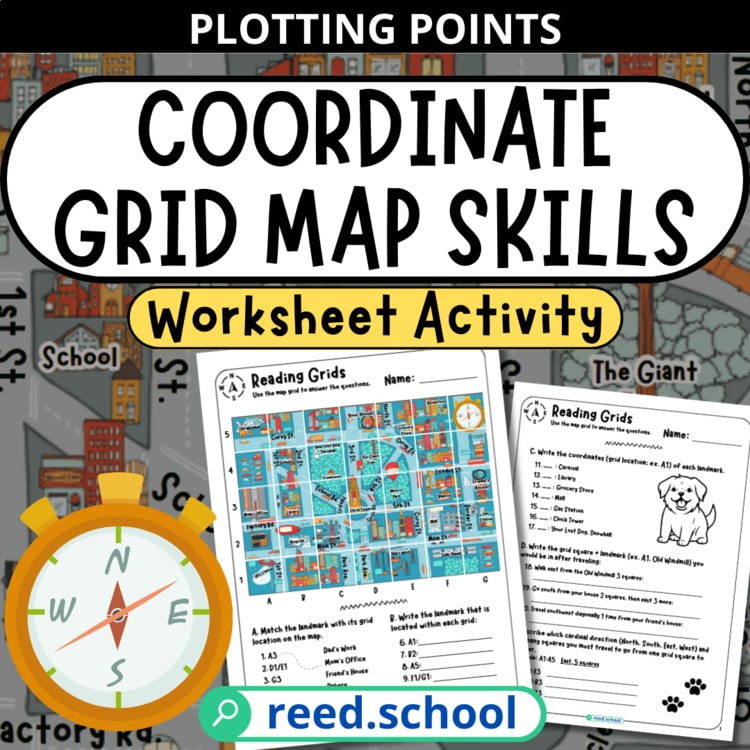
- Use a legend and compass rose to interpret a map.
- Compare two routes using scale.
- Research a location and summarize reliable evidence.
- Explain how geography influenced an event or settlement.
Then choose a theme that gives students a reason to use the skill. Haunted locations can create curiosity about coordinates. A winter delivery route can make map scale meaningful. A summer road trip can combine direction, distance, and regional geography.
Keep the routine familiar
Students should not have to learn a completely new worksheet system just because the theme changed. Use routines they already know:
- Read the title and legend.
- Identify the coordinate or location.
- Plot or trace the route.
- Record evidence.
- Explain the answer.
A familiar routine lets the seasonal content add interest without adding unnecessary cognitive load.
Use the theme to create a real question
A themed activity is stronger when the story creates a decision.
Instead of:
Plot ten coordinates.
Try:
Plot ten locations, identify the regional pattern, and choose which two would make the most practical research route.
Instead of:
Find the holiday symbols.
Try:
Use the legend to locate supplies, then write the shortest route that visits all required locations.
The theme provides context, while the decision provides thinking.
Balance atmosphere with readability
Decorative fonts, dark backgrounds, and dense clip art can make a seasonal page harder to use. Keep the map, coordinate labels, scale, and directions visually dominant.
Check that:
- Grid labels remain easy to read.
- Color is not the only way information is communicated.
- Printed grayscale copies still work.
- Decorations do not cover map features.
- The page has enough contrast for projection.
Interest drops quickly when students cannot tell what the task is asking them to do.
Handle folklore and “haunted” content carefully
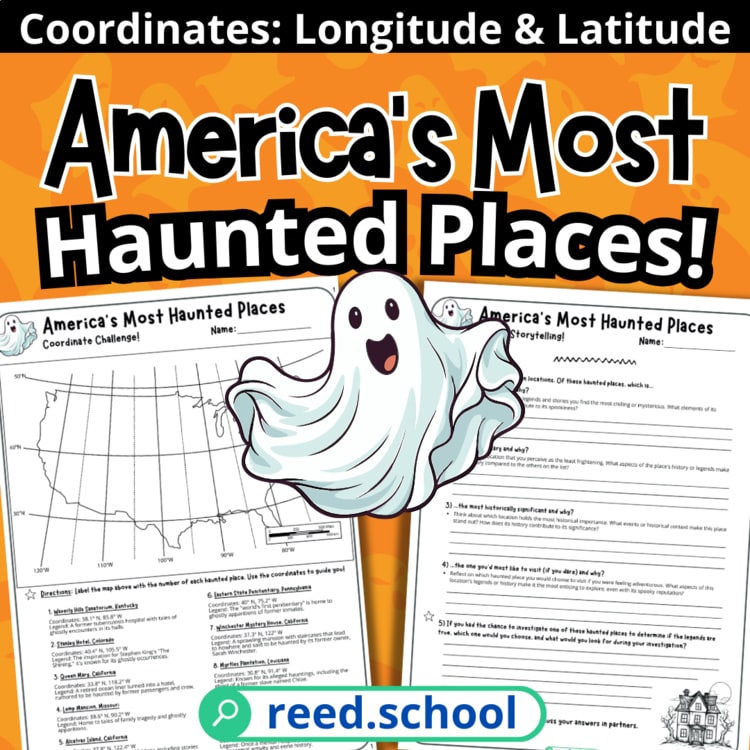
A haunted-geography lesson can combine folklore, history, and place, but it should distinguish among them.
Use language such as:
- “Local stories claim…”
- “The site is associated with a legend about…”
- “Historical records show…”
- “Visitors have reported…”
Do not present an unverified supernatural claim as established fact. The difference between evidence, testimony, tradition, and legend can become part of the critical-thinking lesson.
Provide an alternate theme or location set for students who are uncomfortable with frightening content.
Connect the seasonal task to a nonseasonal transfer
After the activity, ask one question that removes the theme:
- What coordinate routine worked every time?
- How did the legend help you make a decision?
- What would you do first on an unfamiliar map?
- Which source was most reliable, and why?
- How could the same route-planning skill be used in daily life?
This helps students recognize that the skill belongs to them, not to one holiday worksheet.
Use seasonal activities as retrieval practice
A seasonal lesson is often most effective as review. Students already know the skill, and the fresh context asks them to retrieve it.
Good review combinations include:
- Coordinates plus short historical descriptions
- Compass directions plus a maze or route
- Map scale plus travel planning
- Legends plus student-designed symbols
- Types of maps plus a weather or population question
Avoid introducing a difficult new concept on a day when costumes, assemblies, or schedule changes already compete for attention.
Keep the cultural framing inclusive
Not every student celebrates the same holidays. Frame the activity around a season, public tradition, historical topic, or optional theme rather than assuming shared participation.
Offer equivalent choices when a theme may be sensitive. A student who skips a haunted-locations activity could investigate unusual landmarks, abandoned places, or historic mysteries using the same coordinates and questions.
The academic expectations should remain equal across choices.
Assess with one ordinary problem
End the lesson with a brief, nonseasonal item using the same skill. If students can transfer the routine to an ordinary map, the activity did more than entertain.
For example, after a Halloween coordinate challenge, give one coordinate on a plain U.S. map and ask students to plot it and explain the order used.
The America’s Most Haunted Geography Challenge combines coordinates with short descriptions of ten American locations. It works best as high-interest latitude-and-longitude practice after students already understand the plotting routine.