Students often learn the words fragment and run-on before they can reliably hear what makes a sentence complete. A stronger sequence begins with meaning: a sentence needs someone or something to talk about, information about that subject, and a thought that feels finished.
Once students can test a sentence for completeness, the grammar labels become useful. A fragment is missing something the reader needs. A run-on contains more than one complete sentence without a clear boundary between them.
Start with two questions
Give students a short sentence:
The rabbit crossed the garden.
Ask:
- Who or what is this sentence about?
- What happens or is true about that subject?
“The rabbit” is the subject. “Crossed the garden” is the predicate. Together, they express a complete thought.
Repeat the routine with several examples. Keep the early sentences concrete:
- The window rattled.
- Our class measured the seedlings.
- Two hikers waited near the bridge.
- The blue kite landed in a tree.
Students do not need to diagram each sentence. They need a dependable way to check whether both important parts are present.
Contrast complete sentences with missing parts
Place a complete sentence beside a fragment:
The small robot rolled across the floor.
The small robot near the open box.
Ask the two questions again.
The second group tells who the sentence is about, but it does not tell what the robot did or what was true about it. It has a subject but lacks a complete predicate.
Try the opposite pattern:
Carried the books to the shelf.
This tells an action, but the reader does not know who carried the books. The sentence is missing a subject.
Use simple labels:
- Missing subject: Who or what?
- Missing predicate: What happens or is true?
Students can hold up an “S” card for a missing subject, a “P” card for a missing predicate, or a check mark for a complete sentence.
Repair instead of merely identifying
Identification is useful, but repair requires deeper thinking.
Give students a fragment and several possible additions:
___ sparkled after the rain.
Possible choices:
- The wet sidewalk
- Near the playground
- Before lunchtime
Only “The wet sidewalk” creates a complete subject and a meaningful sentence.
For a missing predicate:
The brown puppy ___.
Possible choices:
- slept beneath the chair
- under the soft blanket
- after dinner
Ask students to read the completed sentence aloud. A repair should sound complete and make sense, not merely fill the blank.
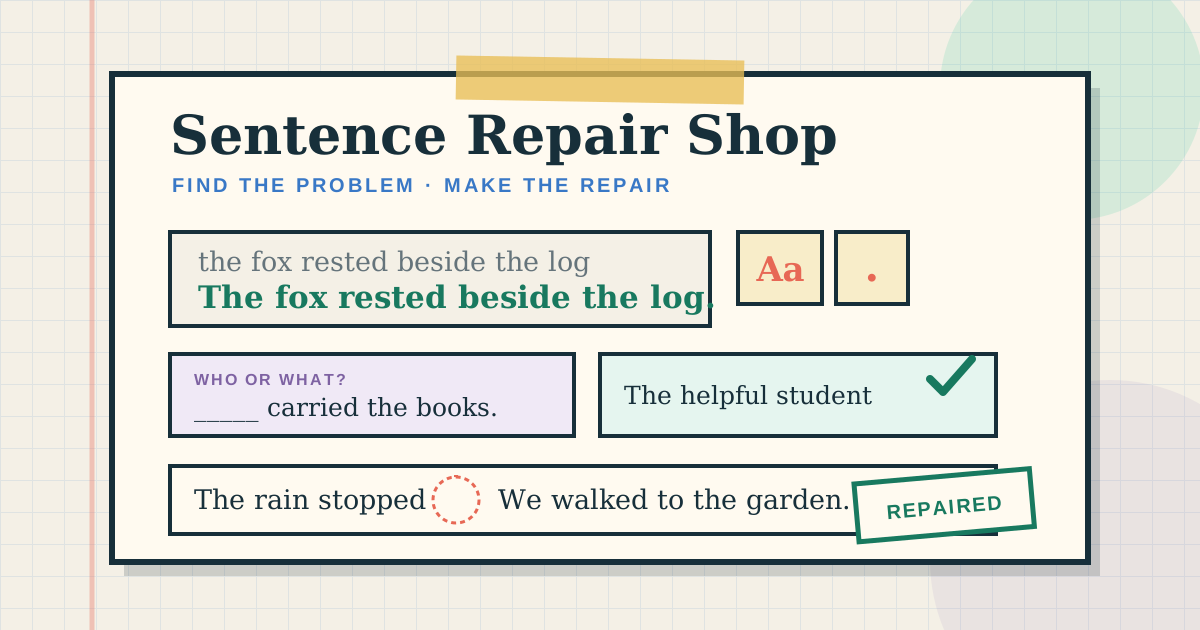
The Sentence Repair Shop game uses this same structure for short browser-based practice with missing subjects, missing predicates, sentence starts, and run-ons.
Teach run-ons as two complete thoughts
A run-on is easier to understand when students can first identify each complete sentence inside it.
Write:
The rain stopped we walked to the garden.
Ask students to find the first subject and predicate:
- Subject: The rain
- Predicate: stopped
Then find the second:
- Subject: we
- Predicate: walked to the garden
Both groups can stand alone. The problem is not that the sentence is “too long.” The problem is that two complete thoughts have been pushed together without a sufficient boundary.
For the first lessons, use a period:
The rain stopped. We walked to the garden.
Later, students can compare other valid repairs:
The rain stopped, so we walked to the garden.
When the rain stopped, we walked to the garden.
Beginning with periods keeps the early task focused on finding the sentence boundary.
Use sentence strips
Write each run-on on a long paper strip. Ask a student to place a clothespin, sticky flag, or cut mark where the first complete thought ends.
Useful examples include:
- The bell rang we opened our notebooks.
- Maya found the missing key she placed it on the desk.
- The soup smelled delicious everyone gathered at the table.
- The puppy heard the door it hurried into the hallway.
After students identify the boundary:
- Add a period.
- Capitalize the first word of the second sentence.
- Read both sentences aloud.
The physical separation makes an invisible grammatical boundary visible.
Give feedback about the thought
“Wrong spot” does not teach much. Respond to the student’s chosen boundary.
When the break is too early:
The words before this point do not yet express a complete thought.
When the break is too late:
A complete sentence has already ended. Look for where the next subject begins.
When the break is correct:
Both sides have a subject, a predicate, and a complete thought.
This language directs attention to sentence structure rather than guessing.
Keep capitalization and punctuation connected to meaning
Students may treat capital letters and ending marks as decorations added after writing. Connect each convention to its job.
A capital letter signals that a new sentence is beginning.
A period tells the reader that a statement has ended.
A question mark tells the reader that the sentence asks a direct question.
Contrast:
where did the blue kite land
Where did the blue kite land?
The repair changes more than appearance. It tells the reader how to enter and interpret the sentence.
For early practice, avoid sentences where several ending marks could be defensible. Clear statements and direct questions let students focus on the convention.
Differentiate the task
Students who need more support can:
- Use shorter sentences.
- Underline the subject once and the predicate twice.
- Read the sentence aloud before deciding.
- Choose between two repair options instead of three.
- Use a sentence frame with a visible “Who or what?” box.
- Work with a partner who explains the repair.
Students ready for more challenge can:
- Repair the same run-on in two valid ways.
- Explain why a chosen fragment is incomplete.
- Combine two short sentences with an appropriate conjunction.
- Write a fragment and exchange it with a partner for repair.
- Find fragments or run-ons in an anonymous practice paragraph.
Do not increase difficulty merely by making sentences longer. The grammatical relationship should become more complex only after the basic test is secure.
Respect language variation
Sentence instruction should distinguish formal writing conventions from judgments about people’s speech.
Students may use language patterns at home or in conversation that differ from the edited English expected in a school assignment. The goal is not to label a home dialect as broken. The goal is to give students control over the conventions used in a particular writing context.
A useful teacher statement is:
We are practicing one set of conventions that readers often expect in formal school writing. Learning these conventions gives you another choice as a writer.
That framing teaches access and flexibility rather than replacement.
Use a quick exit check
An effective exit ticket needs only three items:
- Add a subject or predicate to complete one fragment.
- Mark the boundary in one run-on.
- Explain how you knew one repaired sentence was complete.
The explanation is the most valuable part. A student who can say, “Both sides have a subject and predicate,” is developing a transferable editing strategy.
Move from sentences into paragraphs
Sentence repair should eventually support larger writing rather than remain an isolated grammar exercise.
After students repair individual sentences, give them a short paragraph containing:
- One missing-subject fragment
- One missing-predicate fragment
- One run-on
- One missing capital or ending mark
Ask students to repair the paragraph and then reread it for meaning.
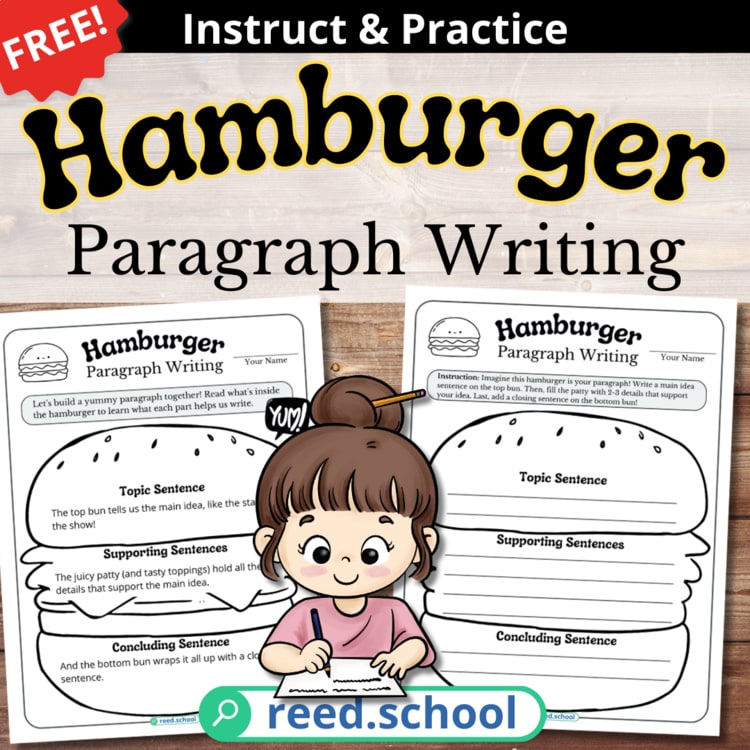
When students are ready to organize complete sentences around one main idea, the free Hamburger Paragraph Organizer provides a visual bridge from sentence structure to paragraph structure.
For a reusable opening routine, the 365 Daily Bell Ringers can also provide short prompts that teachers adapt into writing, discussion, or occasional editing practice.
The goal is not for students to hunt for errors forever. It is for them to develop a small set of questions they can use independently:
- Who or what?
- What happens or is true?
- Does the thought feel complete?
- Is another complete sentence beginning?
- Does the reader know where the sentence starts and stops?