High school students are more likely to value grammar when it helps them solve a real writing problem. A rule in isolation can feel like trivia; the same rule used to clarify an argument, tighten a college essay, or improve an email has an obvious purpose.
The Elements of Style offers compact principles that work well for this kind of instruction. The key is to treat the book as a source of editing decisions—not as a list students must memorize.
Teach one decision at a time
Choose a narrow focus for each lesson. Useful starting points include:
- Prefer specific nouns and active verbs.
- Remove words that do not add meaning.
- Keep items in a series parallel.
- Place related words close together.
- Use punctuation to show how ideas connect.
- Choose a consistent point of view and verb tense.
Some examples and preferences in older style manuals reflect the language and publishing conventions of their time. Invite students to test advice against clarity, audience, purpose, and current usage rather than presenting every recommendation as timeless law.
Use a four-step mini-lesson
An effective grammar lesson can fit into 15 minutes.
1. Notice
Show two versions of one or two sentences. Ask students what changed and which version is easier to understand.
The committee made a decision to postpone the event.
The committee postponed the event.
Students may notice that the second version is shorter, but the important question is why it is stronger: the verb now carries the action directly.
2. Name
Give the decision a brief, usable label, such as “turn hidden actions into strong verbs.” Keep the explanation short enough that students can hold it in mind while editing.
3. Practice
Ask students to revise two or three sentences. Include at least one example where the obvious edit would change the meaning, so they must think rather than apply a mechanical shortcut.
4. Apply
Students find one place in their own draft where the principle could help. The transfer from practice sentence to authentic writing is the part that makes grammar instruction stick.
Make comparison the center of discussion
Instead of asking only, “Is this correct?”, ask:
- What does the reader understand first?
- Which words carry the meaning?
- Does the revision change the emphasis?
- Is the sentence concise, or merely short?
- When might the original version be the better choice?
These questions move grammar beyond error hunting. Students learn that writers make choices and that a “better” sentence depends on what the writer needs it to do.
Connect sentence work to paragraph work
A polished sentence cannot rescue a paragraph with no controlling idea. After a few sentence-level lessons, zoom out:
- Underline the paragraph’s main claim.
- Circle evidence or supporting details.
- Draw arrows from each detail to the claim it supports.
- Revise sentences that interrupt the logic or repeat the same point.
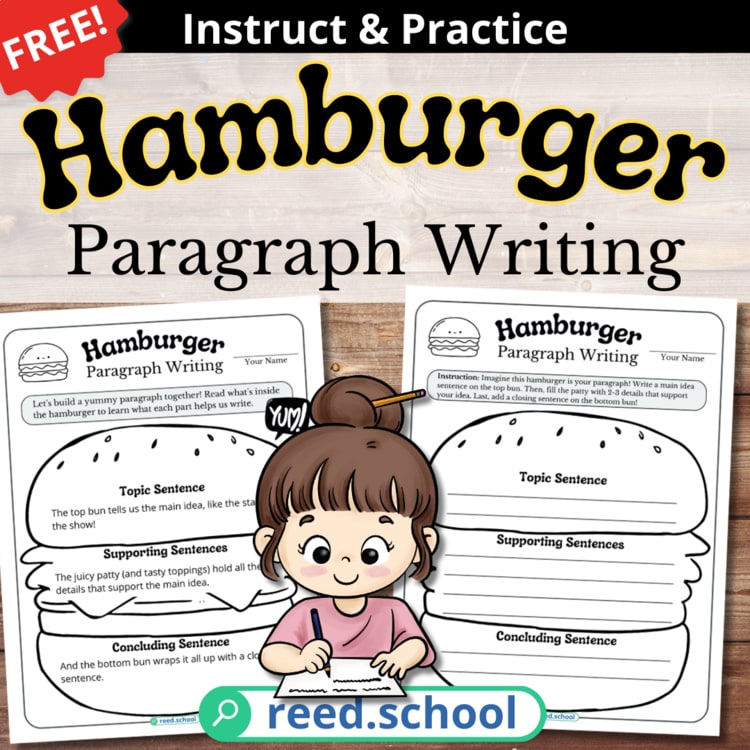
Writers who need a visible structure before revising can use the hamburger paragraph organizer to check the relationship among the topic sentence, evidence, explanation, and conclusion.
Build a sustainable weekly routine
Grammar practice does not need to consume an entire class period.
- Monday: Notice and name one editing principle.
- Tuesday: Revise a few shared examples.
- Wednesday: Explain and compare two possible revisions.
- Thursday: Apply the principle to current writing.
- Friday: Reflect: “Which change improved your draft most, and why?”
Keep a class editing checklist that grows by one item at a time. Before a major submission, students choose two or three items that match their own patterns instead of trying to “fix everything.”
Assess the reasoning, not just the answer
A useful exit ticket gives students a sentence, asks for a revision, and requires a one-sentence explanation. The explanation reveals whether a student understands the principle or simply guessed.
In conferences, try prompts such as “Read this aloud,” “What do you want the reader to notice here?” and “Show me one choice you made on purpose.” These prompts preserve student ownership while directing attention to clarity.
Ready-made practice
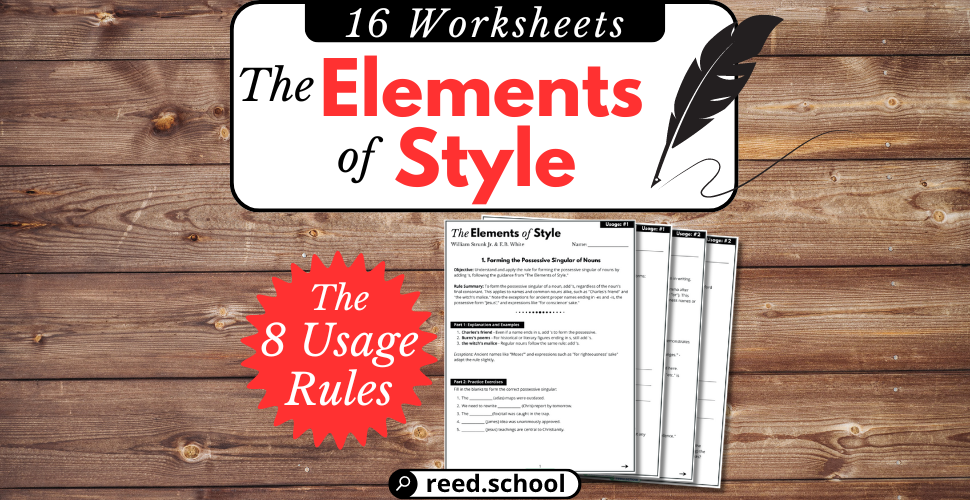
If you want a structured set of high school exercises built around Strunk’s usage principles, view The Elements of Style: Strunk’s Usage Mastery on TPT.