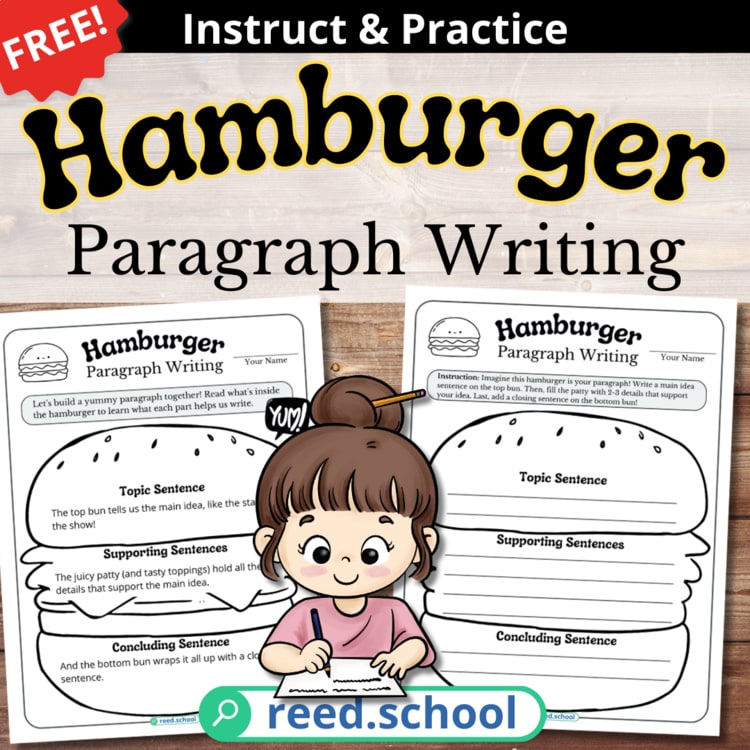
A graphic organizer can make an invisible writing process visible. It can also become a form students believe they must complete before they can write anything.
The goal is not to remove support on a fixed schedule. It is to help students internalize the planning decisions the organizer represents and choose tools more independently.
Name the thinking job behind each box
Before fading an organizer, make sure students know why each part exists.
For a paragraph planner:
- Main-idea box: What do I want the reader to understand?
- Detail boxes: What evidence or examples belong?
- Explanation boxes: Why does each detail matter?
- Conclusion box: What final insight should the reader keep?
Students are less likely to depend on the picture when they can name the decision.
Watch for readiness signs
A student may be ready for less structure when the student can:
- State a focused point without a prompt
- Select details that actually support it
- Explain the connection orally
- Organize ideas in a logical order
- Begin drafting without waiting for every box to be checked
- Notice when the organizer does not fit the writing purpose
- Revise a plan after discovering a better idea
Neat completion is not the same as readiness. Some students fill every box and still do not understand the relationships.
Fade one feature at a time
Use a sequence rather than removing the organizer suddenly.
Stage 1: Complete visual organizer
Provide labels, prompts, examples, and space for every part.
Stage 2: Reduced prompts
Keep the layout but remove sentence starters or example language.
Stage 3: Plain outline
Replace the picture with simple headings or bullet points.
Stage 4: Flexible planning menu
Students choose among bullets, a web, a table, note cards, sketching, or oral rehearsal.
Stage 5: Self-directed planning
Students decide whether a written plan is needed and explain the choice.
A student can move forward for one task and return to more support for a harder genre or unfamiliar topic.
Remove redundancy first
Some organizers ask students to write complete sentences in every box and then copy the same sentences into a draft. That can make planning feel like double work.
As students improve, allow keywords, phrases, symbols, or abbreviated notes. The organizer should hold ideas, not become a hidden first draft unless that is the intended support.
Use oral planning as an intermediate step
Ask students to explain the planned paragraph to a partner without reading every box. The partner listens for:
- A clear main point
- Relevant support
- A logical order
- A missing explanation
If the student can talk through the structure, the next organizer can be lighter.
Students who struggle to write notes may record a brief voice memo, use speech-to-text, or rehearse with the teacher before drafting.
Teach students to choose the tool
Present a planning menu and connect each tool with a purpose:
- List: sequence or several examples
- T-chart: compare two sides
- Web: generate related ideas
- Timeline: order events
- Claim-evidence table: build an argument
- Story mountain: track narrative structure
- Sketch with labels: plan a setting or process
- No written organizer: suitable when the task is short and the writer has a clear plan
Ask students to finish:
I chose ___ because my writing needs ___.
Choice should be reasoned, not simply “I picked the shortest one.”
Keep the scaffold available without requiring it
Place familiar organizers in a folder or digital location students can access. Normalizing optional return prevents support from feeling like a punishment.
A confident writer may use a full organizer for a complicated research paragraph. Another may use only a checklist for a familiar response. Independence includes knowing when to seek structure.
Change the success criteria
When students use a full organizer, feedback may focus on whether the parts are present. As the scaffold fades, shift toward the writing itself:
- Is the purpose clear?
- Does the organization help the reader?
- Does each paragraph develop one idea?
- Is evidence explained?
- Are transitions meaningful?
- Does the ending fit the piece?
Students should not believe the organizer’s shape is the definition of good writing.
Avoid common fading mistakes
Removing support for everyone at once
Readiness varies by student, genre, topic, language demand, and task length.
Treating a blank page as rigor
Less scaffolding is not automatically more challenging in a productive way. The goal is independent decision making, not avoidable confusion.
Keeping one organizer for every genre
A hamburger paragraph cannot plan a full narrative, research report, and argument equally well.
Grading the organizer more than the draft
The plan serves the writing. A changed plan may show growth rather than noncompliance.
Never teaching alternatives
Students cannot choose tools they have never practiced.
Use a reflection after drafting
Ask students:
- Which part of the plan did you actually use?
- What changed during drafting?
- Where did you get stuck?
- Which tool would help next time?
- Did the organizer add clarity or only extra writing?
This turns planning into a metacognitive skill.
Try a three-task release
Across three similar writing tasks:
- Require the full organizer and model it.
- Offer the full organizer or a plain outline.
- Let students choose any planning method and explain the choice.
Compare the drafts, not just the plans. Students who lose focus may need a targeted support restored.
The free Hamburger Paragraph Organizer is a strong first scaffold for developing paragraphs. The next step is not to abandon structure, but to help students carry its logic into outlines, checklists, and their own planning decisions.