A superhero comic can turn a familiar Mother’s Day project into a purposeful writing task. Students interview someone important to them, identify evidence of that person’s strengths, and transform a real story into a short visual narrative.
The final comic may be a gift, but the learning lives in the process: asking useful questions, listening closely, selecting details, sequencing events, writing concise dialogue, and revising for a reader.
Make the invitation inclusive
Not every student can or wants to create a project about a mother. Introduce the assignment as a chance to celebrate a mother, grandmother, caregiver, aunt, mentor, or another trusted person.
Offer three equal pathways:
- Interview a person at home.
- Interview a trusted adult at school.
- Create a fictional community hero inspired by qualities the student admires.
No student should have to explain why they chose an alternative. Keep the language on planning sheets broad—“my hero” or “the person I am celebrating”—even if the final comic uses a Mother’s Day title.
Start with evidence, not a costume
Before students invent capes and powers, ask what makes the person heroic in everyday life. Helpful interview questions include:
- What is something difficult you have learned to do?
- When have you helped someone solve a problem?
- What is a moment when you had to be brave or patient?
- What do you do that other people may not notice?
- What advice would you give your younger self?
- What makes you feel proud?
Students should ask permission before writing about private experiences. They can summarize a sensitive story, replace details, or choose another event.
Turn the interview into a story arc
Comics need a sequence rather than a list of compliments. A simple six-panel plan works well:
- Meet the hero.
- Introduce a problem or need.
- Show the hero deciding what to do.
- Show an action or attempt.
- Reveal the result.
- End with appreciation or reflection.
The “problem” does not need to be dramatic. Helping a nervous child, keeping a family organized, learning a new skill, or supporting a neighbor can all become meaningful stories.
Ask students to write one sentence beneath each planned panel before they draw. This keeps the plot clear and prevents illustrations from consuming all of the work time.
Teach the grammar of comics
Comics require students to make deliberate choices about words and images:
- Captions can establish time, place, or background.
- Speech bubbles show what characters say aloud.
- Thought bubbles reveal internal reactions.
- Panel size can slow down or emphasize a moment.
- Close-ups draw attention to an expression or object.
- Sound words add action when they serve the scene.
Model how to trim dialogue. A speech bubble cannot hold a full paragraph comfortably, so students must decide which words the reader truly needs.
Plan it across three sessions
Session 1: Interview and select
Practice follow-up questions together, conduct or review the interview, and choose one story that demonstrates a heroic quality.
Session 2: Script and storyboard
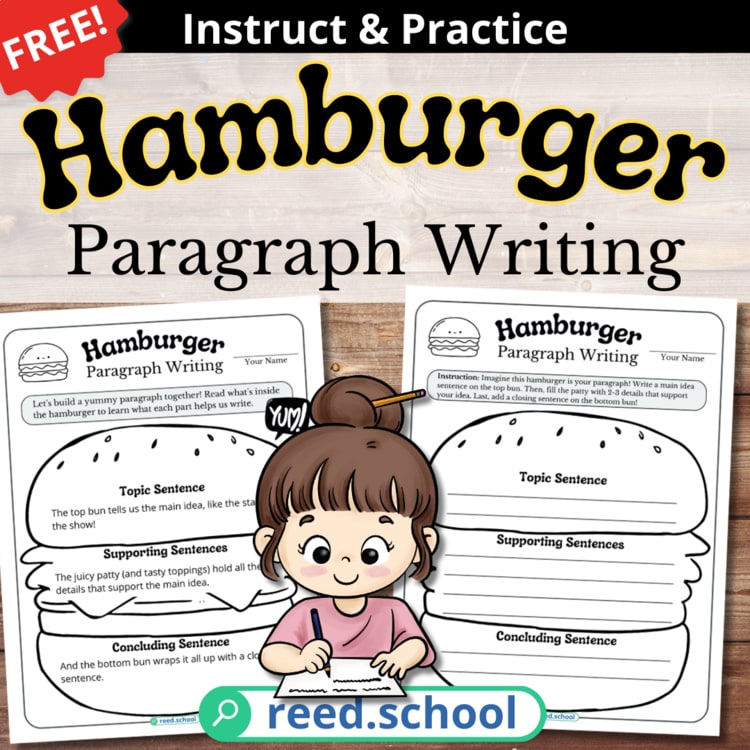
Write the six-panel sequence, draft dialogue and captions, and check that each panel moves the story forward. Students who need help developing the appreciation paragraph can plan it with the hamburger paragraph organizer.
Session 3: Create and revise
Draw the comic, add text, and complete a partner check:
- Can I tell what happens from beginning to end?
- Do the words fit and remain readable?
- Does the comic show why this person matters?
- Are names and personal details shared with permission?
Students can revise by adding a caption, removing repeated dialogue, reordering panels, or clarifying an expression.
Assess the communication
Artistic skill should not determine the grade. Assess the work students practiced:
- Interview notes include relevant details.
- Events follow a logical sequence.
- Dialogue and captions are concise and clear.
- Visuals support the meaning.
- The final reflection connects the story to a heroic quality.
Stick figures, collage, digital drawing, and hand illustration can all meet the same criteria.
Use the finished comics thoughtfully
Let students choose whether the comic goes home, appears in a classroom display, or remains private. A gallery walk can focus on craft—strong openings, clear sequences, and effective dialogue—without ranking whose family story is most impressive.
If you would like interview pages, planning supports, and comic templates prepared together, view the Mother’s Day Superhero Comic project on TPT.