A useful sub plan should be easy for another adult to run without reducing the day to filler. The most reliable lessons are self-contained, use routines students already know, and produce one clear piece of evidence that learning occurred.
“Low prep” should describe the teacher’s emergency workload, not the quality of the student task.
Choose a lesson that can stand alone
Avoid plans that depend on yesterday’s unfinished explanation or tomorrow’s specialized materials. Strong stand-alone options include:
- Practice with a previously taught skill
- A short informational text with a focused response
- A map-reading challenge
- Vocabulary retrieval and application
- A structured writing prompt
- A puzzle followed by an explanation task
- A review station using familiar formats
- An independent project checkpoint with clear criteria
The task can connect to the curriculum without advancing through material students have never seen.
Write directions for the substitute and the students
The substitute needs a short overview:
- Lesson goal
- Materials and locations
- Timing
- Grouping
- Expected product
- Answer key or model
- What to do if students finish early
- Any classroom-specific safety or technology notes
Students need directions they can read independently. Put them on the page or a projectable slide rather than relying on the substitute to translate a long note.
Use numbered steps and visible time estimates.
Build the lesson in four parts
1. Familiar opener — five to ten minutes
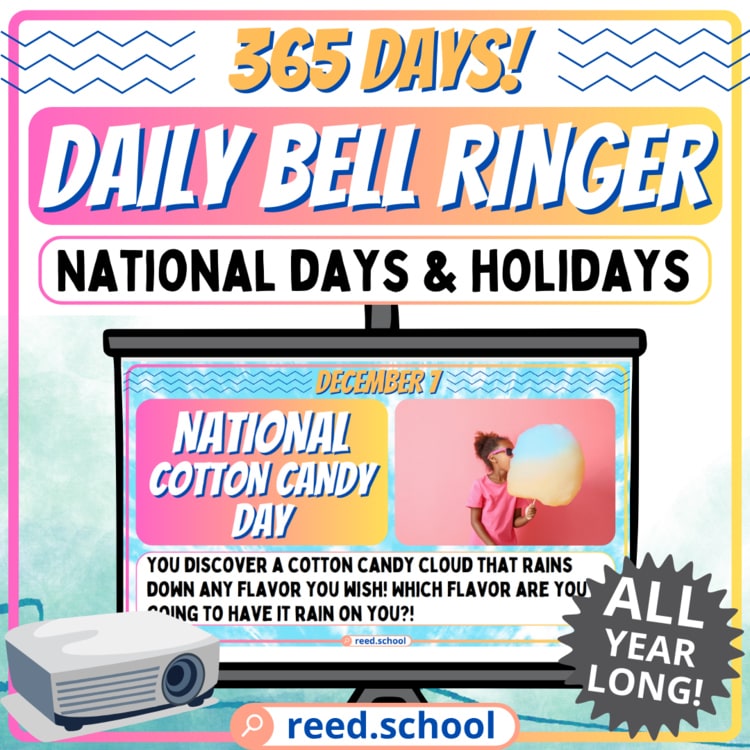
Use a bell ringer, retrieval question, or quickwrite students already know how to complete.
2. Main task — twenty to thirty minutes
Provide one self-contained reading, map, problem set, or activity with all necessary information.
3. Meaning check — ten minutes
Ask students to explain, compare, justify, summarize, or correct. This separates learning from mere completion.
4. Organized close — five minutes
Students submit one product, clean materials, and complete an exit ticket.
A predictable structure helps the substitute keep time and reduces student uncertainty.
Use familiar formats
An emergency absence is not the best time to introduce a complicated new protocol. Choose formats students have used before:
- Claim, evidence, explanation
- Notice, wonder, conclude
- Map question and written route
- Read, annotate, summarize
- Solve, check, explain
- Vocabulary match followed by one application sentence
- Puzzle followed by a cause-and-effect question
The academic content can be fresh while the workflow remains familiar.
Include an answer key that explains
A bare list of answers helps with checking but not with misconceptions. When possible, add one short explanation for questions students are likely to miss.
For open responses, provide a model that shows the expected depth without suggesting there is only one acceptable wording.
Tell the substitute whether students should self-check, trade papers, or leave work ungraded. Do not create a correction routine the class has never practiced.
Make technology optional when possible
A plan that depends entirely on one login, link, projector, or device can collapse. Include a printable fallback or downloadable copy.
Check that:
- Links do not require the teacher’s personal account.
- Videos have captions and a nonvideo alternative.
- Students know how to access the platform.
- The substitute has the needed code or instructions.
- The task can continue if the internet fails.
Technology should support the lesson, not be the lesson’s only doorway.
Plan for early finishers without adding a second lesson
Use extensions connected to the same material:
- Write a second question and answer key.
- Create a challenge problem.
- Explain the most difficult item.
- Revise one response for precision.
- Design a related map symbol, diagram, or example.
- Compare two possible answers.
- Write advice for a student who made a common mistake.
Avoid a random stack of word searches that sends the message that careful work is rewarded with unrelated busywork.
Build accessibility into the packet
Include supports that do not require the substitute to invent accommodations:
- Clear headings and chunked text
- Readable font and spacing
- Vocabulary box
- Sentence frames
- Reduced-copy version when appropriate
- Audio link if already used by the class
- Choice of written or labeled visual response
- Extra time or fewer items as specified in student plans
Keep private student information out of the general substitute packet. Follow school procedures for accommodations and support notes.
Use map activities as reliable stand-alone work
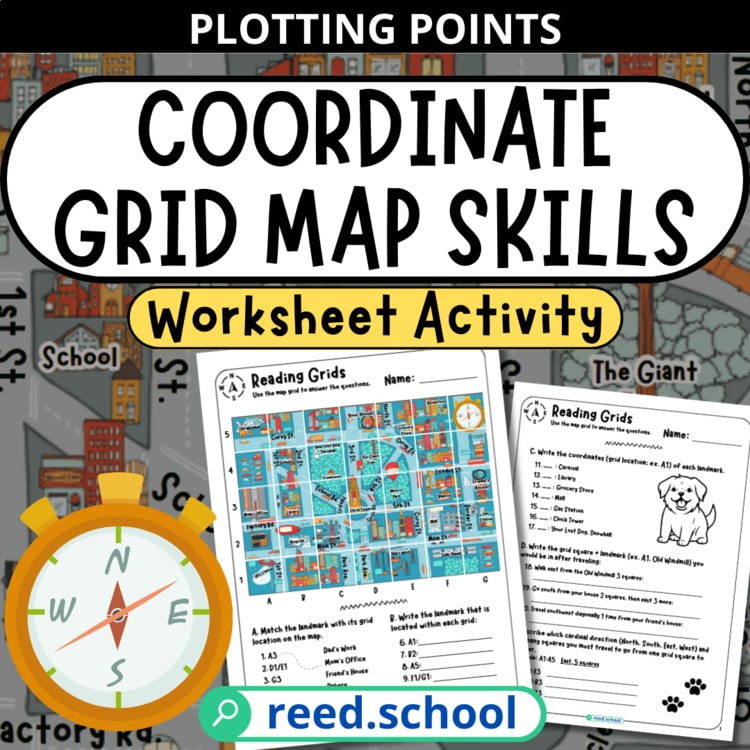
Map-reading tasks often work well because the page contains the information students need. A strong map sub lesson can include:
- Read the title, legend, and compass rose.
- Answer location questions.
- Plot or label new information.
- Write a route.
- Explain one strategy used.
The Coordinate Grid Map Skills activity includes a detailed city map, varied questions, and an answer key, making it suitable for independent practice after the grid routine has been taught.
Use puzzles as the entry, not the whole lesson
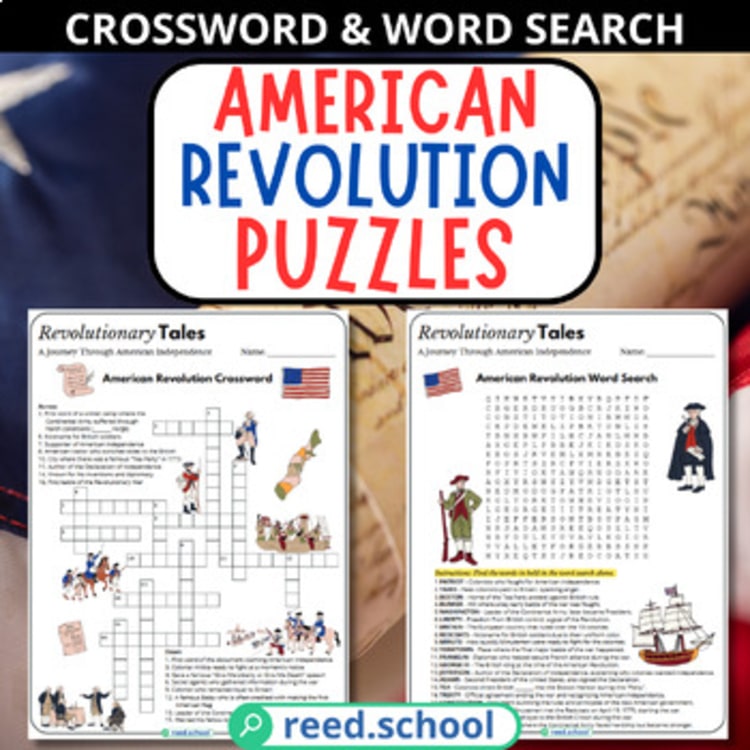
A crossword or word search can support retrieval, especially during a history review. Add one short synthesis:
- Choose three terms and connect them in a paragraph.
- Place five events in order.
- Explain which term represents a cause, event, or result.
- Correct one common misconception.
The free American Revolution Puzzles can serve as the low-stakes first part of a broader review packet.
Leave a meaningful record
Ask students to submit one item that tells you what happened:
- Exit ticket
- Annotated map
- One revised paragraph
- Completed evidence chart
- Most difficult question with explanation
- Self-assessment against three criteria
This is more useful than a completion grade on ten pages.
Maintain one emergency folder
Keep a physical and digital version with:
- Class schedule
- Seating or grouping guidance according to school policy
- Two stand-alone lessons
- Printed directions
- Answer keys
- Early-finisher extensions
- Technology fallback
- Materials list
- Date last checked
Review the folder each quarter. A plan is not emergency-ready if the link expired or the class has not learned the routine.
The best sub plans are not elaborate. They are clear, familiar, complete, and worth doing. One focused lesson with a real outcome is better than a packet designed only to fill the period.