The final weeks of school are full of transitions. Students are excited about what comes next, tired from a long year, and often unsure how to describe how much they have changed. A “Dear Younger Me” letter gives that reflection a clear audience: the student who walked into the classroom at the beginning of the year.
Instead of asking students to list favorite memories, the letter invites them to name challenges, recognize growth, and offer advice. It works especially well in grades 3–5, but the structure is easy to adapt.
Begin with a safe definition of reflection
Tell students that reflection is not a test of who had the “best” year. It is a chance to notice what they know now that they did not know before.
Model a low-risk example from your own experience:
Dear September Me, you are worried about learning everyone’s name. Give yourself time. By October, the classroom will feel much more familiar.
Point out the three moves in the example:
- Name a real feeling or challenge.
- Describe what changed.
- Offer kind, specific advice.
Students should always be allowed to keep personal details private. They can write about a school skill, a classroom routine, a friendship skill, or a moment when they became more confident.
Use prompts that lead to specific memories
“How did you grow?” is a big question. Smaller prompts help students find evidence.
- What felt difficult at the beginning of the year but feels easier now?
- What is one mistake that taught you something useful?
- When did you surprise yourself?
- Which habit helped you learn?
- What would you tell yourself before the first day of this grade?
- What do you hope your future self remembers?
Give students a few minutes to jot ideas before they choose one or two to develop. A quick timeline of the year—fall, winter, spring—can also help students retrieve memories.
Plan the lesson in one class period
A 45- to 60-minute version can follow this sequence:
- Launch (5 minutes): Introduce the idea of sending a message back in time.
- Brainstorm (10 minutes): Use the prompt bank or a three-part timeline.
- Model (5 minutes): Think aloud as you turn one memory into advice.
- Draft (20–25 minutes): Students write independently or with a partner.
- Close (5–10 minutes): Invite an optional share, a private reread, or an exit reflection.
If you have more time, separate planning, drafting, and publishing across two or three days. Students can add an illustrated “time portal,” a then-and-now self-portrait, or an envelope marked with the date it should be opened.
Give the letter a simple structure
Students do not need a rigid formula, but a dependable shape reduces blank-page anxiety:
- Opening: Greet your younger self and describe where they are in time.
- Looking back: Explain one challenge, change, or important moment.
- Advice: Share what helped and what you would do differently.
- Looking forward: End with encouragement or a hope for the future.
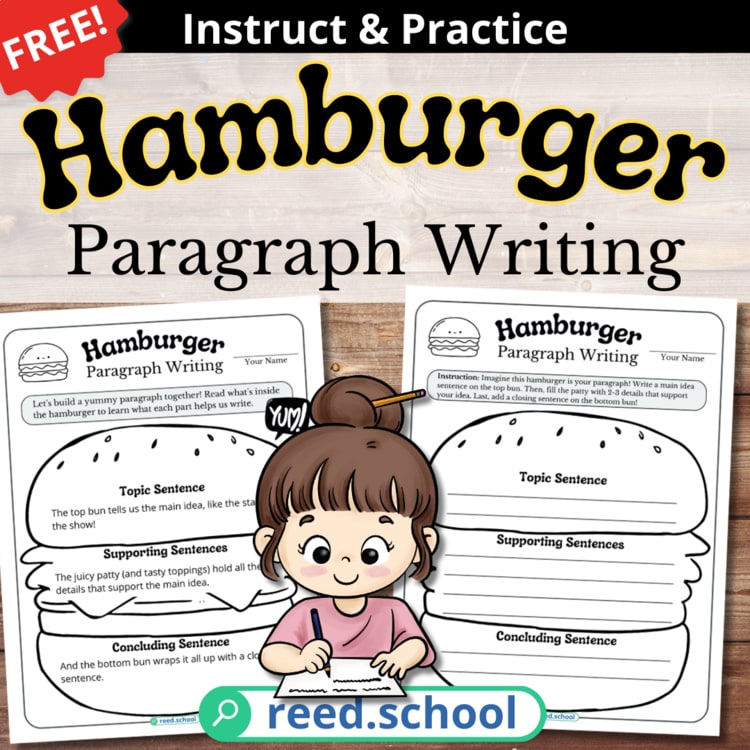
For students who need help organizing one section before drafting the full letter, the free hamburger paragraph organizer provides a familiar topic-detail-conclusion structure.
Differentiate without changing the purpose
Offer support based on the barrier, not the student’s ability to reflect.
- Provide sentence starters such as “At first, I thought…,” “Now I can…,” and “I want you to remember…”
- Let students record an audio draft before writing.
- Allow a comic, postcard, or short series of captions instead of a full-page letter.
- Give multilingual learners time to brainstorm in their home language.
- Offer a school-skills-only prompt for students who prefer not to write personally.
- Challenge confident writers to include a scene with dialogue or a concrete detail.
The goal is thoughtful evidence of growth, not a particular word count.
Keep sharing optional
Reflection becomes less honest when students know they must perform it for the class. Let writers choose whether to share the whole letter, one sentence, or nothing at all. A private teacher response can simply notice the student’s growth rather than correct every convention.
You might close with a gallery of anonymous advice lines, a sealed classroom time capsule, or one final prompt: “What is something you want next year’s teacher to know you can do?”
A ready-to-use version
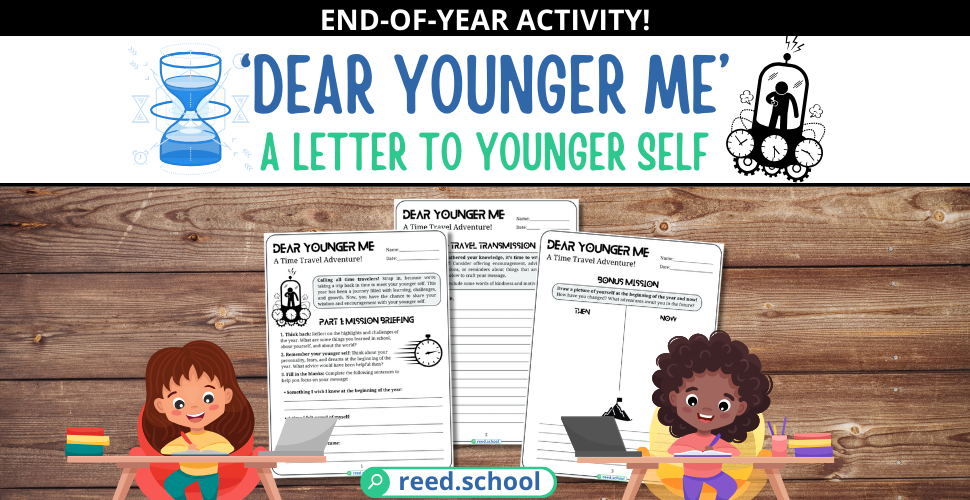
If you would like the prompts, planning pages, and time-travel framing prepared for you, view the Dear Younger Me end-of-year activity on TPT.