Differentiated reading often creates an unwanted tradeoff. Students receive texts they can access, but the class loses a shared story, shared evidence, and shared discussion. One solution is to offer the same core text at more than one reading level.
The events, characters, theme, and essential ideas remain common. Vocabulary, syntax, paragraph length, and scaffolding change so more students can participate meaningfully.
Preserve the same intellectual destination
A lower reading level should not mean a lower-level thinking task. Every version should allow students to discuss the same central questions:
- What happened, and why?
- What does a character want?
- What evidence reveals a theme or moral?
- How does one choice affect another?
- What can readers infer?
The route to the text may differ, but the destination remains shared.
The free Fable Detective game can provide a shared follow-up task in moral, evidence, and vocabulary after students read appropriately supported text versions. The game uses its own original short retellings and is not a replacement for differentiated reading instruction.
Decide what must stay constant
Before adapting a passage, identify the nonnegotiable content:
- Major events
- Important character choices
- Essential facts
- Key domain vocabulary
- Evidence needed for the common questions
- Tone or genre features that matter to the lesson
Then identify what can change:
- Sentence length
- Number of clauses
- Density of description
- Frequency of unfamiliar vocabulary
- Amount of repetition
- Paragraph length
- Visual or glossary support
This protects the meaning from being simplified away.
Adjust language without making it unnatural
A more accessible version may use shorter sentences and more direct syntax, but it should still sound like real writing.
Instead of removing every challenging word, keep a small number of valuable terms and support them through context, a glossary, or discussion. Students need access to rich language, not a text stripped of it.
Useful adjustments include:
- Replacing a rare synonym when it is not instructionally important
- Splitting a sentence with several embedded clauses
- Repeating a clear noun instead of using an ambiguous pronoun
- Adding a brief transition that clarifies time or cause
- Moving background information closer to the event it explains
- Adding a parenthetical definition for one essential term
Avoid telegraphic sentences that make the text choppy or remove logical relationships.
Keep page design from revealing groups
Students quickly notice when one version looks “easier.” Use the same:
- Title
- Cover or header
- Font family
- General page length when possible
- Illustrations
- Question numbering
- Discussion tasks
Assign versions privately. Neutral labels such as A, B, and C are better than “easy,” “average,” and “advanced,” but even letter labels can become public if they are used rigidly.
The strongest practice is flexible assignment. A student may use one level for independent reading and a different level when the topic or task changes.
Use common questions with optional supports
Write a shared set of core questions that every version can answer. Then add supports without changing the thinking demand:
- A vocabulary bank
- A sentence frame
- Page or paragraph references
- A choice of evidence to evaluate
- A graphic organizer
- Oral rehearsal with a partner
- Text-to-speech when appropriate
For example, every student might answer:
What lesson does the character learn, and which event best supports your answer?
One student may write independently. Another may use the frame:
The character learns ___. The event that best shows this is ___ because ___.
The claim and evidence requirement remain the same.
Plan the shared discussion carefully
Do not organize the whole conversation around page numbers, because versions may break paragraphs differently. Refer to events, headings, or numbered sections.
Start with a question every student can enter, then deepen it:
- What choice did the character make?
- What reason did the character have?
- What consequence followed?
- What larger idea does the sequence suggest?
- Which detail from your version best supports that idea?
Students can bring slightly different wording into the same discussion, which can become an advantage. Ask how two versions expressed the same moment.
Group flexibly by task
Not every part of the lesson should be grouped by reading level.
Possible arrangements:
- Read in teacher-supported groups, then discuss in mixed groups.
- Read independently, then pair students who used the same version to verify understanding.
- Use mixed-level groups for theme discussion because everyone knows the same story.
- Pull a temporary vocabulary group regardless of version.
- Let students choose an audio-supported or print pathway.
The text level is one instructional tool, not a permanent identity.
Watch for common failures
The accessible version removes the evidence
If a key action, description, or quotation disappears, students cannot answer the shared question fairly. Check every version against the assessment.
The advanced version is only longer
More words do not automatically create productive challenge. A richer version may include more nuanced syntax, imagery, or implied relationships—not filler.
Students receive different stories
Different texts can be useful, but they do not create the same shared conversation. When the goal is community discussion, keep the core content aligned.
The easiest-looking page creates stigma
Match the visual design and distribute materials discreetly. Explain that readers use different tools for different purposes.
Level assignment never changes
Use current performance, task demands, and student feedback. Revisit placements often.
Assess comprehension separately from decoding support
A student who uses an accessible version can still demonstrate strong inference, discussion, and analysis. Record what the student understood and what support made access possible.
A simple assessment can include:
- One accurate summary sentence
- One evidence-based inference
- One theme or central-idea explanation
- One vocabulary word used in context
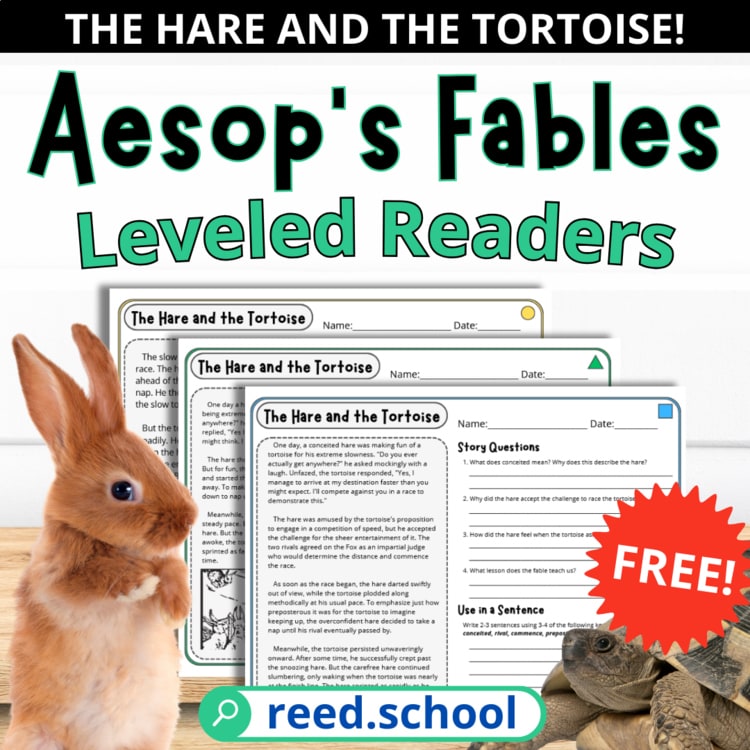
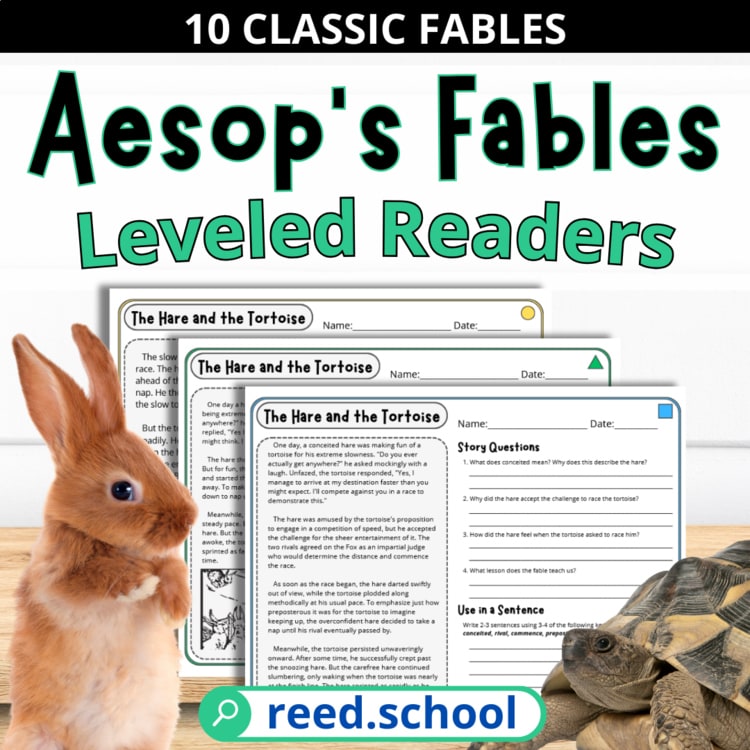
The Aesop’s Fables Leveled Readers use the same ten stories at three reading levels so students can share questions and discussion. The free Hare & Tortoise sample is a practical way to test the approach with one familiar fable.